

There is a moment every high-performing expert knows. It arrives quietly, usually in a meeting room with fluorescent light and a presentation on the screen that is factually incorrect. You know it is incorrect because you have spent twelve years becoming the person most qualified to know. You say so. Clearly. With evidence. The room nods, thanks you, and then proceeds to do exactly what it was going to do before you opened your mouth.
The frustration is not just professional. It is existential. Because somewhere along the way, in a lecture hall or a performance review or every moment someone told you that you were exceptional, you were handed a story. The story went like this: master your craft, and the world will follow your lead. Be the best, and the best will be in charge.
That story is not true. It never was.
But here is what makes this more than a simple misunderstanding: the organization told you the story first. They rewarded you for believing it. They called you indispensable, paid you well, gave you harder and harder problems, and then behind a door you were not invited through, they handed authority to someone who could not have solved those problems on their best day.
The Expert’s Illusion is not a cognitive error that experts alone make. It is a condition that organizations find useful. A brilliant expert who believes competence should grant authority will keep performing brilliantly, keep waiting patiently, and never become the disruptive force they could be. The illusion keeps them productive. And contained.
The map is not the territory. But the cartographer rarely knows they are not the one driving the bus.
The DNA of Authority vs. The DNA of Competence
Competence is internal. You earn it alone, in the hours no one sees, through repetition and failure and the slow accumulation of pattern recognition that eventually becomes mastery. It belongs to you. No org chart can remove it.
Authority is external. It is conferred by a room, by a relationship, by a political alignment that has nothing to do with who knows the most. It is not about what you know. It is about who has decided to grant you the right to decide.
The first is about The What. The second is about The Who.
When these two things collapse into one, when the expert begins to believe that The What automatically produces The Who, a category error occurs. Philosophers call a version of this Moral Intellectualism: the belief that knowledge of the correct answer automatically produces the right to implement it. The expert’s version runs parallel. The Cartographer spends years drawing the most accurate map ever made. Every contour, every elevation, every road. Then they sit down in the passenger seat, hold up the map, and wait to be handed the wheel. The Bus Driver, who drew nothing, is already moving.
Competence is a currency. Authority is a license. They are not the same instrument. And you cannot spend one to purchase the other.
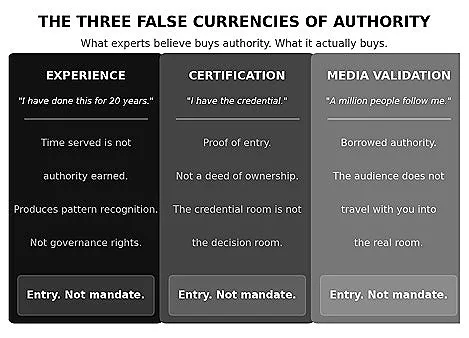
Figure 2: The Three False Currencies. What experts believe buys authority. What it actually buys.
The Three False Currencies
There are three things experts accumulate that feel like authority and are not.
The first is experience. Twelve years in the field. Twenty years of clinical practice. Three decades in the industry. Length of tenure is mistaken for depth of mandate. The assumption that time served is equivalent to authority earned. It is not. Time produces pattern recognition. It does not produce governance rights. The room you have been in longest is rarely the room where decisions about your future are made.
The second is certification. The MBA who opens with Harvard. The doctor who believes an MD grants authority over hospital administration strategy. The project manager who believes the badge earns deference in a boardroom. The credential is a proof of entry. It is not a deed of ownership. The institution that granted the credential is not the institution where power actually moves.
The third is the most seductive. Media validation and social proof. A million followers. A Forbes profile. A conference keynote. A TED stage. Social consensus functions as borrowed authority. The audience’s agreement feels like power. Until it meets a room that does not care about the audience.
The scientist who built a genuine breakthrough walks into a VC meeting and discovers that fifteen years of peer-reviewed validation counts for almost nothing without a narrative that fits inside ninety seconds. The investor is not evaluating the methodology. They are evaluating whether they can feel the size of the problem before they see the solution.Precision reads as an inability to communicate. Caution reads as a lack of conviction. The expert’s greatest tools become their loudest liabilities.
The data scientist who has built something extraordinary, where the math is sound and the outputs are meaningful, now has to make a boardroom believe it. But belief is not a data problem. Conviction is not a function of R-squared. The model tells you what is true. It does not tell you how to make a room feel the weight of what it means. Without that translation, from insight to felt consequence, the model sits in a deck that nobody acts on. The expert solved the hard problem. They simply did not know the harder one was waiting on the other side of the room.
The doctor who has spent twenty years as the unquestioned authority in every clinical room they entered now sits across from an MBA-holding CFO and a private equity-backed board chair to develop and operate a new business arm for the hospital. Their clinical authority is real. It is also entirely non-transferable. The white coat does not come through the boardroom door. Nobody told them that when they accepted the seat.
These are not frauds. Their competence is not in question. The gap is not between their self-perception and reality. It is between their domain’s rules and the new room’s rules. And the new room never announced that it had different ones.
The expert did not fail. The translation layer simply does not exist. And nobody offered to build it.
The Language of Power
When the expert finally understands this, they often reach for the obvious solution. Become a better communicator. Learn executive presence. Develop soft skills. Read the room.
These are not wrong answers. They are incomplete ones. Because they treat power’s language as a cosmetic adjustment. A new coat on the same architecture. And the architecture is the problem.
Power communicates differently at altitude. Not louder. Not more confidently. Actually the opposite. Real authority at the senior level is quieter, more selective, more comfortable with silence and ambiguity. It does not argue. It frames. It does not convince. It invites. It does not correct. It redirects. The higher the room, the more the language compresses. A question lands harder than a statement. A pause carries more weight than an explanation. Presence becomes more important than volume.
The expert, trained to prove and demonstrate and explain, walks into that room and does all the wrong things. Not because they are wrong people. Because they are fluent in a language the room stopped speaking three levels below.
There are broadly three types of authority operating in any serious organization. Technical Authority: I know more than you about this specific thing. Valid. Bounded. Non-transferable. Positional Authority: I have the title. Granted externally. Fragile without the other two. And then Presence Authority: when they speak, the room reorganizes itself. This is the one that operates at altitude. It is not about what you know or what your title says. It is about whether you can hold a room in uncertainty without reaching for your credentials as a life raft.
The expert has the first. They are often given a version of the second. Nobody told them the third exists. And the third is the one the boardroom, the investor meeting, the hospital strategy session actually runs on.
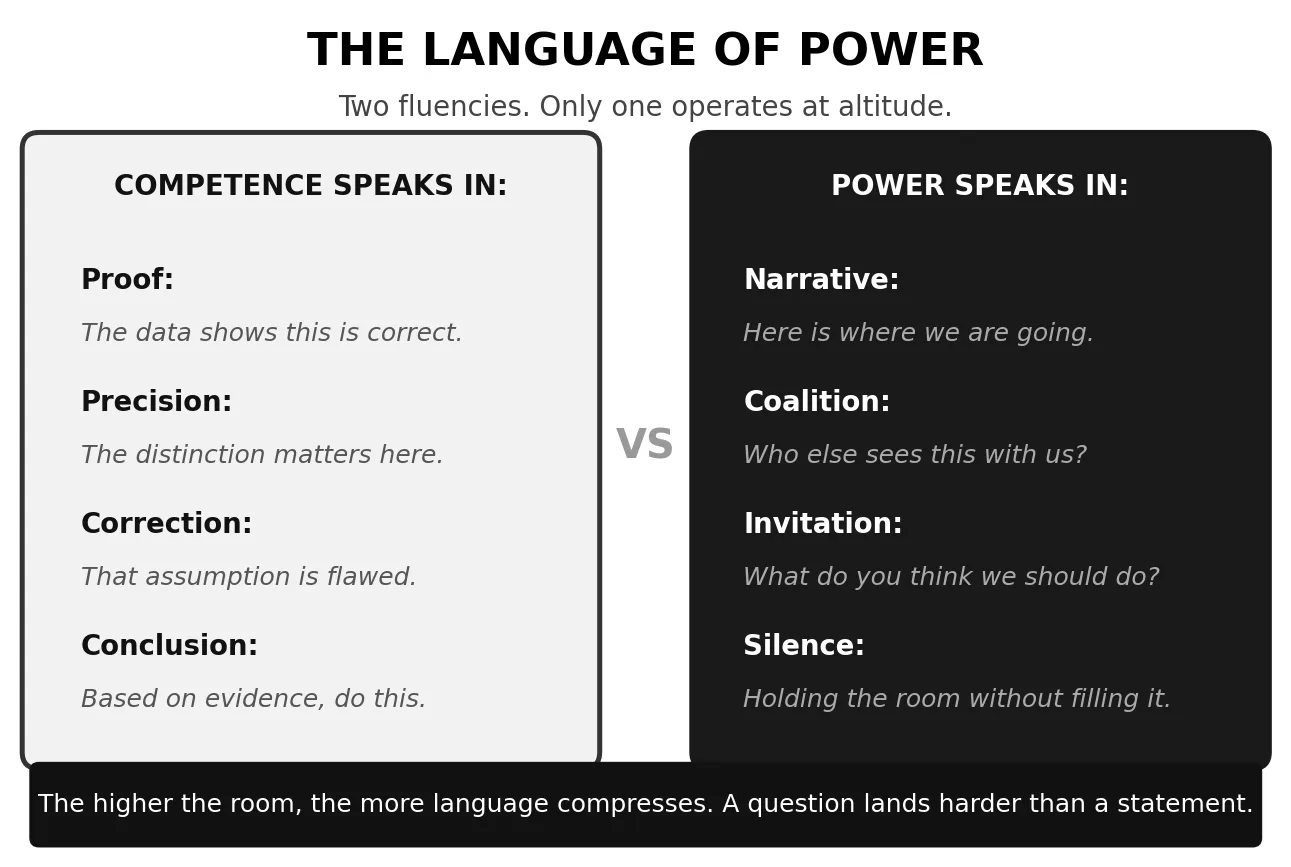
Figure 3: The Language of Power. Two fluencies. Two entirely different rooms. Only one operates at altitude.
The Glass Ceiling of Mastery
Here is the paradox that almost no one names out loud.
Companies systematically trap their most competent people in roles that depend on their competence. The expert becomes too valuable to move. Promotion would mean losing what the organization needs most from them. So instead, they are compensated generously, praised lavishly, and held in place. The organization calls this respect.
The expert, over time, calls it something else.
What makes this a Glass Ceiling of Mastery is its invisibility. Unlike other glass ceilings, this one is constructed from genuine appreciation. The expert was not held back by prejudice or politics. They were held back by their own excellence. Which means there is no one to be angry at. No injustice to name. Just a slowly dawning realization that decades of indispensability built them not a career but a cage.
And here is the layer nobody wants to look at directly. The expert often clings to technical identity not because they have been denied something, but because letting go of I am the expert means temporarily becoming no one, before becoming something new. That gap is terrifying. Insisting that competence should grant authority is sometimes not ambition. It is armour.
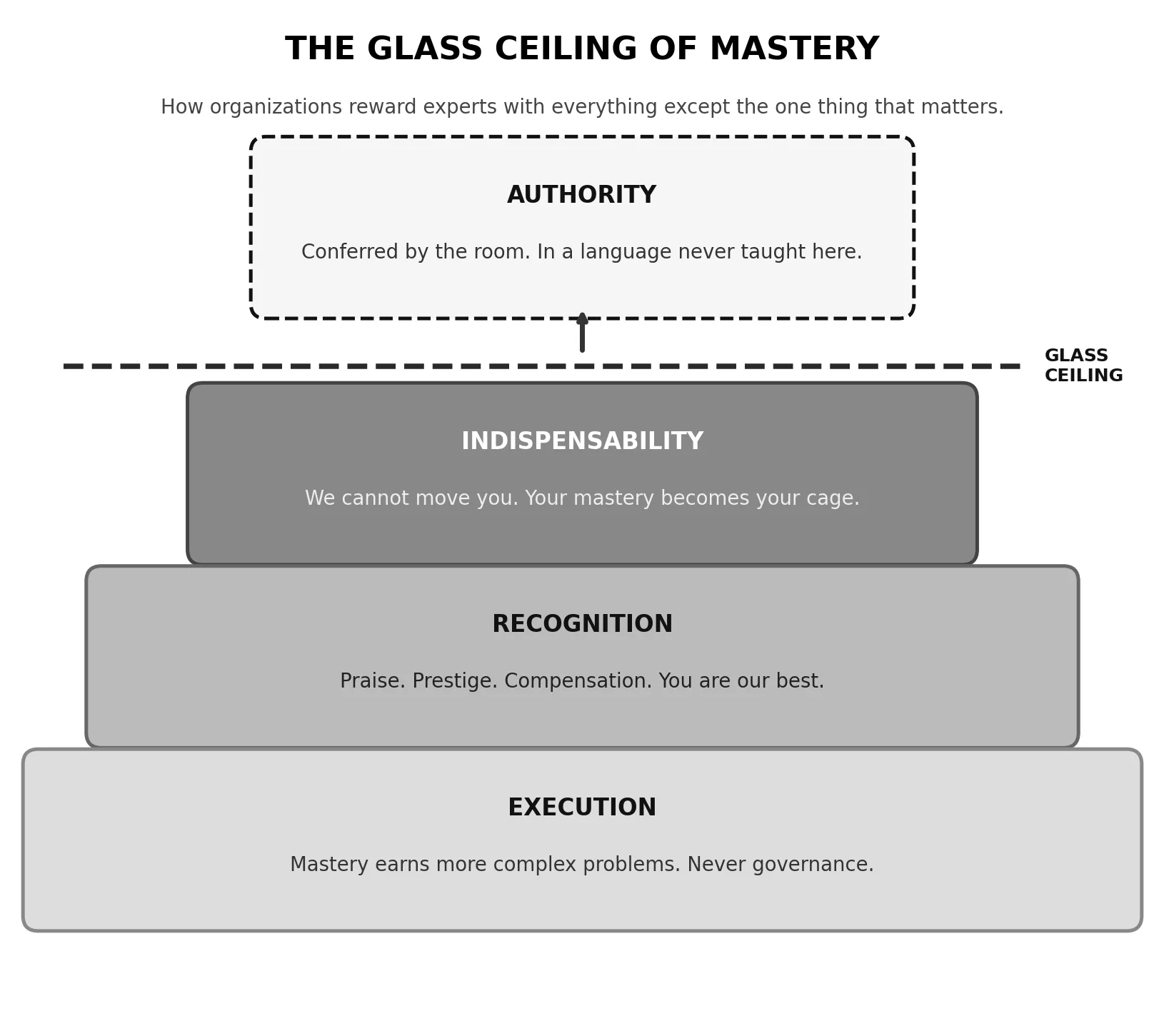
Figure 4: The Glass Ceiling of Mastery. How organizations reward experts with everything except the one thing that would change their trajectory.
What Experts Actually Need to Do
The tempting answer here is a list. Learn to communicate. Build political capital. Develop executive presence. Network strategically. These answers are true. And they miss the point entirely. Because they extend the original logic: if I get good enough at this new thing, the room will finally recognize me. Same error. New domain.
The real answer has three layers.
The first is grief. Before any skill acquisition, there is a loss to acknowledge. The deal that was offered, master your craft and authority will follow, was not honoured. Until the expert actually grieves that, not intellectually acknowledges it but feels the weight of it, they will keep trying to earn their way into a room that operates by entirely different rules.
The second is the recognition that authority is a second craft. Not a reward. Not a personality trait. A learnable discipline that requires its own apprenticeship, its own deliberate practice, its own willingness to be wrong before being right. The scientist who becomes a founder does not need to become a salesperson. They have defended doctoral dissertations in rooms full of people who wanted them to fail. That is conviction. It just lived inside one domain. The work is not to become someone new. It is to take what they already are into a room that speaks differently.
The third layer is the one nobody wants to hear. The expert has to be willing to be a beginner again. Not in their field. In the new room. That means entering without the credential as armour, without the years of experience as a shield, without the social proof as a substitute for presence. For people whose entire identity is built on mastery, this is genuinely terrifying. But expertise in one domain teaches you something deeper than its subject matter. It teaches you how to learn. That capacity is the most transferable thing an expert has. It just needs to be aimed at a new target.
Authority is not a reward to be collected. It is a language to be learned, a discipline to be studied, an apprenticeship that nobody told you was available because the people who completed it preferred you did not know.
You cannot learn to operate at altitude from a curriculum. It is not in a book, including this one. It develops through a specific kind of confrontation with yourself, guided by someone who has stood in both rooms and can name what they see in you before you can name it yourself. Someone who understands the language of mastery deeply enough to know exactly what it costs you to let it stop being the only language you speak.
If this article found you, it found you for a reason.
The question is not whether you are exceptional enough to deserve authority. You already know the answer to that.
The question is whether you are willing to become a beginner in the one room you have never been invited to study.
Something to sit with:
What if the organization’s praise was never a promise, but a policy?
What if authority is not earned through being right, but built through making others feel safe enough to grant it?
And what would it cost you, truly, to become a beginner in the one room you have never been invited to study?
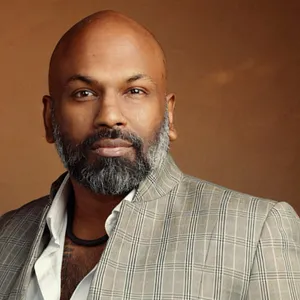
Dananjaya Hettiarachchi is the 2014 World Champion of Public Speaking. He works with senior leaders on the gap between external achievement and internal clarity, and on the specific work of operating with authority at altitude.